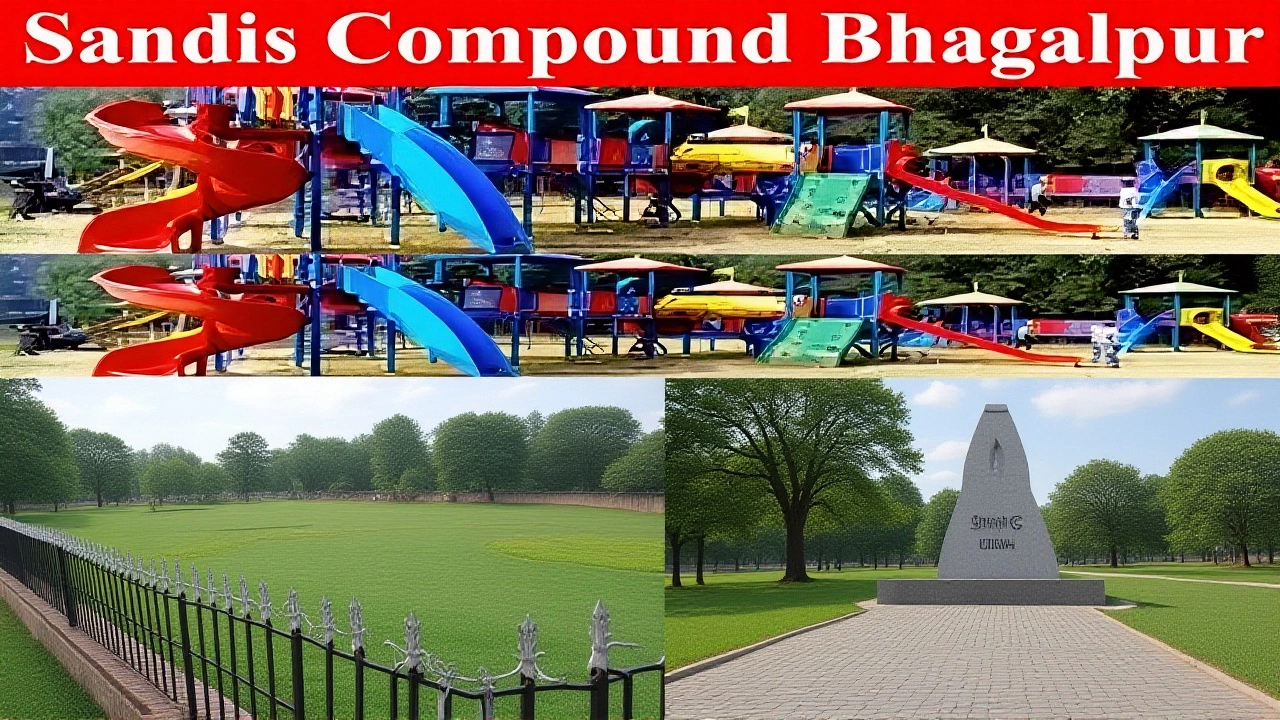
When Sandys Compound, Bhagalpur, Bihar suddenly started charging visitors for entry, the reaction was immediate and fierce. This historic ground, long considered the city’s only major open space for evening walks and children’s play, has become a flashpoint for civic anger. The twist? The fees weren’t just introduced; they were imposed by a private agency hired by the local administration, turning a free public amenity into a pay-to-enter zone.
Here’s the thing: for decades, this sprawling field was the heartbeat of community life in Bhagalpur. Now, locals are facing a ₹10 ($0.12) per person fee during peak hours. But wait—the rules seem to be shifting daily, adding confusion to the frustration. Initially, reports indicated charges applied from 8:00 AM to 4:00 PM. However, newer headlines suggest a change, with fees now potentially applicable until 6:00 PM, after which entry becomes free again. The inconsistency alone is enough to spark outrage.
The New Paywall at the City's Heart
The details are still somewhat unclear regarding the exact timeline of these policy shifts, but the core issue remains sharp. Bhagalpur Smart City, the municipal body responsible for urban development, awarded a tender to a private agency for the maintenance and upkeep of the compound. Almost immediately after taking charge, this agency implemented an entry fee structure.
Under the initial strict regime, visitors had to pay ₹10 between 8:00 AM and 4:00 PM. Entry was completely prohibited after 10:00 PM. Critics argue this is a double burden. "People already pay for swings and other amenities inside," one local resident noted. "Charging for basic entry feels like squeezing money from those who can least afford it." The sudden monetization of a space that was previously free has left many feeling alienated from their own neighborhood.
Civic Groups Threaten Protest
The backlash hasn't stayed quiet for long. The Bhagalpur Coordination Committee, a local civic group, has publicly condemned the decision. They label the move as "disappointing for citizens" and have issued a stern warning: if the fee isn't revoked, they will launch a movement against it.
This isn't just about ten rupees. It’s about access. For a city where large, well-maintained public grounds are scarce, Sandys Compound is unique. Taking away free access strikes at the heart of urban equity. The committee argues that the decision, attributed to both Bhagalpur Smart City and the Municipal Corporation, ignores the needs of daily walkers, joggers, and families who rely on this space for recreation.
A Question of Maintenance vs. Monetization
Proponents of the new rule might argue that maintenance costs money. And indeed, the state of infrastructure raises valid questions. A viral video report recently highlighted the "dark truth" of facilities built under the Smart City project within the compound. Toilets constructed years ago are reportedly in ruins—doors broken, water supplies nonexistent, and overall hygiene poor.
Oddly enough, while the agency collects fees, the quality of services doesn't appear to match the revenue generation model. Residents point out that if the goal was better maintenance, the results haven't been visible yet. Instead, the first tangible change was a turnstile and a ticket counter. This disconnect between promise (better upkeep) and reality (broken facilities + new fees) is fueling the fire.
Conflicting Timelines Add to Chaos
Adding to the frustration is the lack of clear communication. Early reports stated the fee window closed at 4:00 PM. Recent headlines, however, claim the fee applies until 6:00 PM, with free entry thereafter. Why the shift? Was it a concession to public pressure, or a simple administrative error?
Turns out, no official clarification has been widely disseminated. This ambiguity leaves citizens guessing. Do I pay today? Will the rule change tomorrow? The uncertainty erodes trust in the Bhagalpur Municipal Corporation and its partners. In urban governance, clarity is as important as policy itself.

What Happens Next?
The Coordination Committee’s threat of agitation looms large. If protests materialize, they could disrupt traffic and draw state-level attention to the issue. Meanwhile, the private agency continues to operate under its contract. The key question is whether Bhagalpur Smart City will intervene to renegotiate terms or stand by the current model.
Historically, similar moves in other Indian cities have faced pushback. When public spaces are privatized without transparent benefit-sharing, communities resist. Bhagalpur is watching closely. The coming weeks will reveal whether this is a temporary experiment or a permanent shift in how India’s tier-2 cities manage public assets.
Frequently Asked Questions
How much is the entry fee at Sandys Compound?
The entry fee is currently set at ₹10 ($0.12) per person. This charge applies during specific daytime hours, though there is conflicting information about whether the cutoff time is 4:00 PM or 6:00 PM. After the designated fee hours, entry is reportedly free, but access is strictly prohibited after 10:00 PM.
Who decided to impose the entry fee?
The fee was implemented by a private agency hired through a tender process by Bhagalpur Smart City. While the agency manages daily operations, civic groups blame both Bhagalpur Smart City and the Municipal Corporation for approving the policy that allows such charges on a public historical site.
Why are locals protesting the new rule?
Residents argue that Sandys Compound is the city's only major open space for recreation. Charging for entry excludes low-income families and contradicts the principle of public access. Furthermore, critics note that existing amenities like toilets remain in disrepair despite the new revenue stream, suggesting mismanagement rather than improved service.
Is there a plan to remove the fee?
As of now, there is no official announcement reversing the fee. However, the Bhagalpur Coordination Committee has threatened to launch a public movement if the charge is not withdrawn. The recent adjustment in timing (potentially extending free entry earlier in the evening) may indicate some responsiveness to public pressure, but the core fee remains.